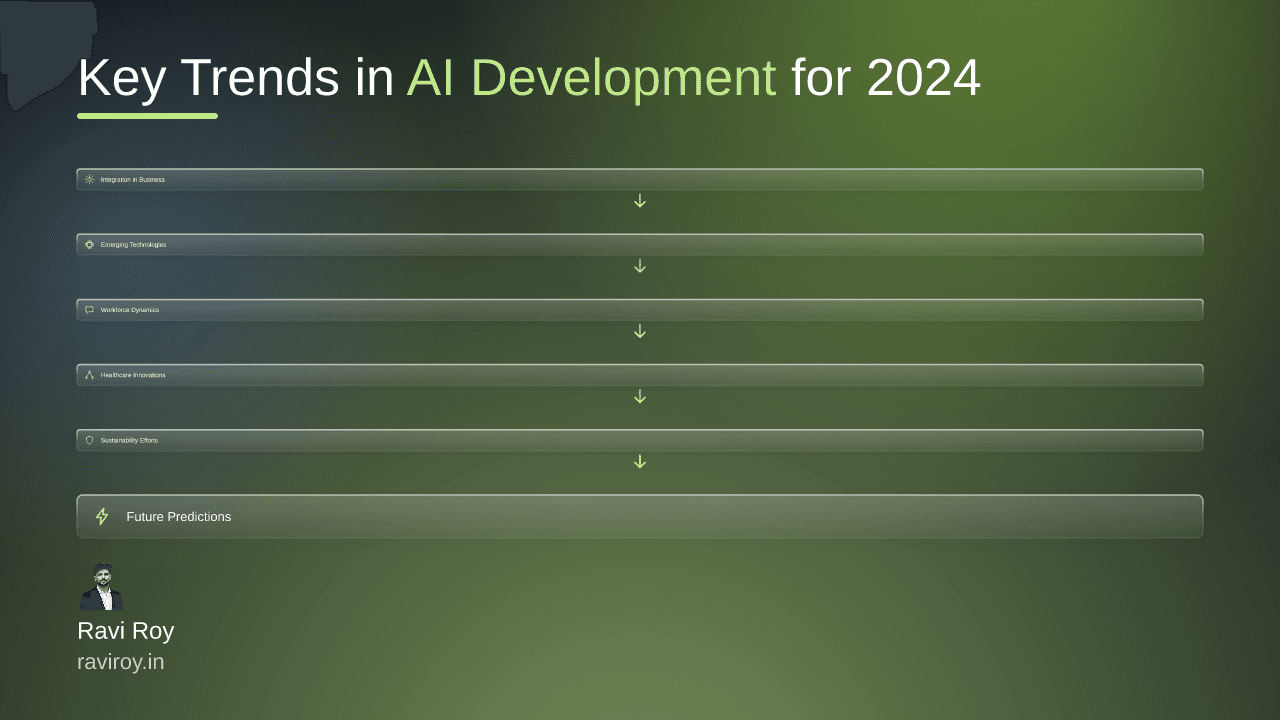
Overview of AI Development Trends for 2024
As we delve into 2024, the landscape of AI development is set to transform markedly, with businesses increasingly adopting artificial intelligence to streamline operations and enhance productivity. The projected growth of AI across various sectors illustrates a robust evolution fueled by innovation, investment, and the strategic integration of technology into everyday processes.
Increasing Integration of AI in Business Processes
Organizations are no longer viewing AI as a separate entity; instead, it's becoming a vital component of their operational framework. The anticipated growth in AI is staggering, with forecasts suggesting that global spending on AI systems will exceed $500 billion by 2024, indicating an annual growth rate of over 20%. This uptick will drive companies to embrace AI for functions ranging from customer service automation to data analysis, enhancing both efficiency and decision-making capabilities.
Moreover, businesses harnessing AI technologies are experiencing optimized operations. For instance, e-commerce giants are deploying machine learning algorithms to personalize shopping experiences, thereby increasing customer engagement and boosting sales. Companies in manufacturing are leveraging AI for predictive maintenance, resulting in reduced downtime and enhanced productivity.
Ethical AI and Regulation Developments
With this rapid adoption comes the pressing need for regulations. Stakeholders must navigate a complex legal landscape as governments and regulatory bodies look to set standards for ethical AI deployment. In 2024, we expect the introduction of comprehensive frameworks aimed at ensuring transparency, accountability, and fairness in AI systems.
Expect discussions around data privacy, bias mitigation, and responsible AI usage to rise in importance. Companies will need to invest in compliance strategies that not only align with these regulations but also create a culture of ethical awareness throughout their organizations.
Emerging Technologies Shaping AI Development
As the pace of AI development accelerates, several emerging technologies are shaping its trajectory. Notably, advancements in Natural Language Processing (NLP) and the rise of AI in edge computing are game-changers that will redefine industry practices.
Advancements in Natural Language Processing
NLP technology is experiencing breakthroughs that allow machines to understand, interpret, and generate human language with greater accuracy. Tools like OpenAI's ChatGPT are examples of how NLP is becoming increasingly sophisticated, allowing businesses to automate customer interactions and generate content seamlessly.
For example, in the finance sector, institutions are using NLP to analyze customer feedback and market sentiment, leading to more informed investment decisions. As NLP continues to evolve, we can anticipate even broader applications in industries ranging from healthcare to legal services.
AI in Edge Computing
The integration of AI and edge computing is revolutionizing how data is processed. Edge computing allows data to be analyzed closer to where it is generated, significantly reducing latency and bandwidth issues. This shift is particularly beneficial for industries such as manufacturing and logistics, where real-time decision-making is critical.
Take the automotive industry, for instance; with the increase of connected vehicles, edge AI systems are enabling cars to process information swiftly, enhancing safety features, and optimizing routes for efficiency. This trend points to a future where real-time data processing will become the norm across various sectors.
Impact of AI on Workforce Dynamics
The increasing adoption of AI does not solely imply a reduction in jobs; instead, it heralds a transformation in workforce dynamics that many are unprepared for.
AI-Driven Job Creation
While there are concerns about job displacement, AI is, in fact, creating new roles that require human ingenuity. From AI trainers to ethics compliance officers, the spectrum of career opportunities is expanding. The World Economic Forum anticipates that AI will create 58 million new jobs by 2024, driven by industries undergoing digital transformations.
For businesses to thrive, it's essential they invest in this evolving landscape by identifying roles that AI cannot easily replicate, such as critical thinking, creativity, and emotional intelligence. These human-centric skills will be invaluable as companies harness AI technologies.
Reskilling and Education Challenges
However, the challenge remains in reskilling the existing workforce to harness these emerging opportunities. Education systems must evolve alongside AI developments, providing curriculums that prioritize digital literacy and practical AI applications.
Organizations should develop training programs that encourage lifelong learning, focusing on the skills necessary for future jobs in AI. Collaborations between businesses and educational institutions can pave the way for comprehensive training initiatives designed to bridge the skills gap.
AI in Healthcare: Transformative Trends
The healthcare industry is poised to benefit tremendously from AI technologies, enhancing patient outcomes and transforming operational efficiencies.
AI for Predictive Analytics
AI's ability to analyze vast datasets allows for predictive analytics that can forecast patient outcomes. Case studies reveal that hospitals utilizing AI predictive models have significantly improved patient care by identifying those at risk of developing complications.
For instance, programs employing machine learning algorithms to analyze electronic health records can flag high-risk patients before a potential crisis occurs, allowing for timely intervention. As AI continues to prove its worth in healthcare, ethical considerations around data privacy and consent will become paramount.
Improvement of Patient Care through AI
AI is also redefining patient care, with applications including chatbots providing 24/7 support and AI-driven systems making personalized care recommendations. This not only enhances patient experience but also enables healthcare professionals to focus on more complex tasks, improving overall efficiency.
However, the implementation of these technologies necessitates a thoughtful approach to ethical concerns. Ensuring data security and mitigating bias in AI algorithms are critical to maintaining trust within the healthcare system.
AI Development and Sustainability
As awareness of climate change grows, the intersection of AI development and sustainability becomes increasingly relevant. AI can play a pivotal role in addressing environmental challenges.
Green AI Initiatives
In 2024, we are likely to see a surge in "green AI" initiatives aimed at minimizing the environmental impact of AI systems. From optimizing energy use in data centers to employing AI algorithms that reduce waste, companies are starting to embrace practices that align with sustainability.
For instance, tech companies are developing energy-efficient AI models that minimize the carbon footprint associated with training large datasets. These initiatives not only serve environmental purposes but also resonate with consumers increasingly concerned about eco-friendliness.
AI for Climate Change Solutions
Projects leveraging AI to combat climate change are also gaining traction. Innovations like AI-driven climate modeling allow researchers to predict weather patterns and assess risks associated with climate change. As more businesses adopt sustainable practices, the role of AI will be integral to creating intelligent systems that streamline resource usage and manage natural disasters.
Future Predictions and Market Insights
Looking forward, the AI market is poised for substantial growth as industries continue to invest heavily in technology.
Market Growth Forecasts
Market analyses predict that the overall market for AI will expand significantly, with growth rates reaching upwards of 30% in certain sectors. Industries such as finance, healthcare, and retail are expected to attract the majority of investments as they recognize the potential to enhance service delivery through AI.
Investment Trends in AI Startups
In this burgeoning marketplace, AI startups will attract keen interest from venture capitalists eager to fund innovative ideas forwarding AI technologies. As a result, we can anticipate a wave of groundbreaking solutions emerging, reshaping how businesses approach challenges. The venture capital landscape will be instrumental in pushing the boundaries of what AI can achieve in various sectors.
Conclusion: Preparing for an AI-Powered Future
As we forge into 2024, keeping abreast of key AI development trends is crucial for organizations and professionals alike. The integration of AI into business processes and the emergence of new technologies will create abundant opportunities, provided that stakeholders engage with ethical considerations and invest in reskilling initiatives.
Businesses must be proactive in adapting their strategies to remain at the forefront of AI innovation. Collaborating with educational institutions and participating in discussions surrounding AI development will be essential for fostering a culture of continual learning and ethical responsibility.
What specific AI trends do you believe will have the most impact in 2024, and why?
💬 Join the conversation — share your take in the comments and tell us what you’d add.