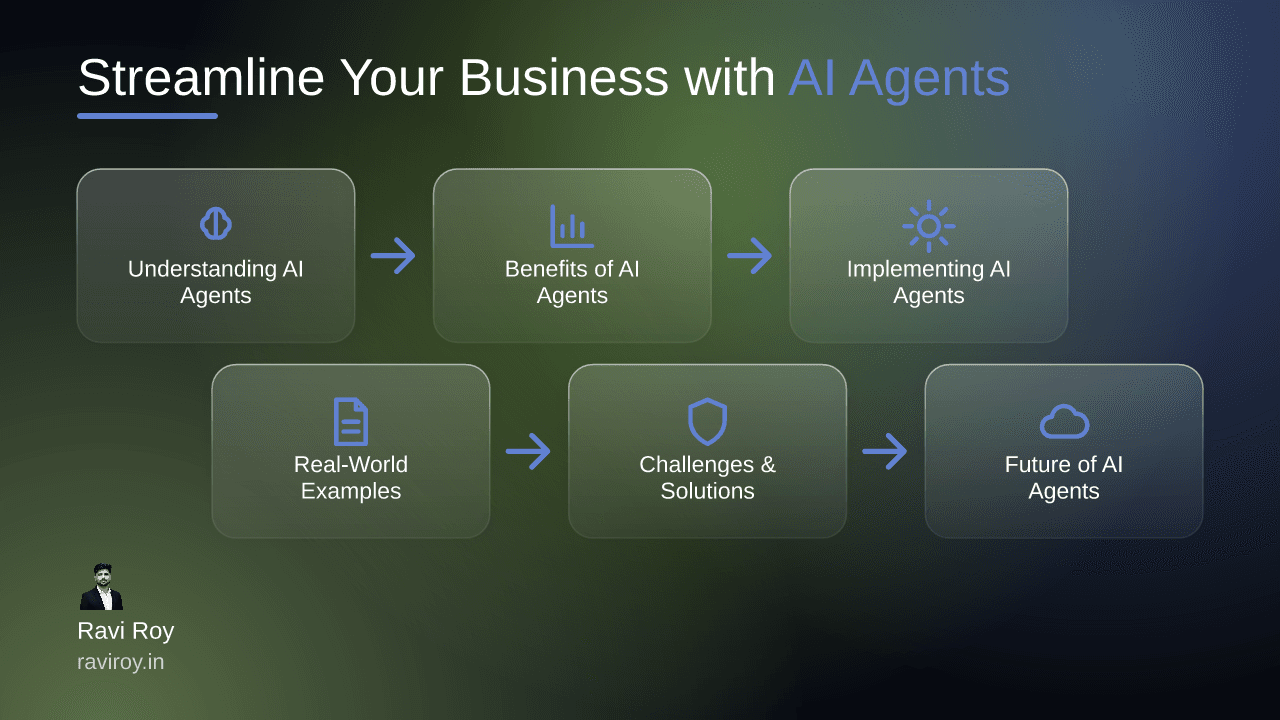
Understanding AI Agents and Their Role in Automation
Artificial intelligence is no longer just a futuristic concept; it's a cornerstone of modern business strategy. AI agents are transforming workflow automation, empowering businesses to operate more efficiently and effectively. But what exactly are these AI agents, and how do they fit into the picture of workplace automation?
What are AI Agents?
AI agents are autonomous programs designed to perform tasks without human intervention. They possess capabilities that allow them to gather data, analyze patterns, and make decisions based on the information they process. A key feature of AI agents is their ability to learn from past interactions, thanks to machine learning algorithms that enable them to adapt and improve over time.
How Do AI Agents Work?
AI agents operate by processing large sets of data and identifying trends that help them make informed decisions. They can be categorized into two main types: rule-based agents and learning-based agents. Rule-based AI agents follow pre-defined instructions to complete tasks, while learning-based agents, powered by algorithms, can adjust their actions based on new data inputs. This learning capability leads to enhanced performance as these agents refine their processes to achieve better outcomes.
Benefits of Implementing AI Agents
The adoption of AI agents for workflow automation can yield significant advantages for businesses.
Increased Efficiency
One of the most significant benefits of AI agents is their ability to accelerate repetitive tasks. From data entry to inventory management, AI agents can perform these functions swiftly and accurately, freeing up human resources for more complex decision-making tasks. According to research, organizations implementing AI-driven automation have reported a 30% increase in task completion rates.
Enhanced Accuracy
AI agents greatly enhance the accuracy of operations. Studies indicate that the implementation of AI tools results in error reductions by up to 90% in specific tasks like data processing. This leads to fewer mistakes and higher-quality outcomes, which ultimately benefit customer satisfaction and loyalty.
Cost Savings
By automating tedious tasks, businesses can reap substantial cost savings. Research shows that for every dollar invested in AI-driven automation, companies can expect savings of approximately $4 to $5 over time. These reductions come from lower labor costs, reduced errors, and increased operational efficiency.
Practical Steps to Implement AI Agents in Your Workflow
Integrating AI agents into your existing workflows requires careful planning and execution.
Identifying Opportunities for Automation
Start by identifying processes that are labor-intensive and repetitive. Common areas ripe for automation include data entry, reporting, customer inquiries, and inventory management. Analyze workflows to pinpoint inefficiencies that could benefit from AI-driven solutions.
Choosing the Right AI Agent
Selecting the appropriate AI agent is crucial for successful implementation. Criteria should include compatibility with current systems, scalability, and specific functionalities that align with your business needs. Popular choices include RPA (Robotic Process Automation) tools like UiPath and AI-driven assistants such as Salesforce Einstein and IBM Watson.
Integration with Existing Tools
Integrating AI agents into existing systems can be challenging but manageable. Begin with a phased approach: pilot the AI agent in one department before organizational-wide deployment. Ensure that system compatibility is assured, and provide staff training to foster smooth transitions.
Real-World Examples of Successful AI Agent Implementation
Looking at real-world examples can illuminate the practical benefits of AI agents in business operations.
Case Study: E-commerce
Consider an e-commerce company that implemented AI agents for inventory management. By using predictive analytics, the AI agent analyzed purchasing patterns and optimized stock levels, reducing excess inventory by 40%. This not only minimized storage costs but also improved customer satisfaction by ensuring that popular items were always in stock.
Case Study: Customer Support
Another successful application of AI agents is in customer support. A leading telecommunications firm deployed AI chatbots to handle routine inquiries, resulting in a 50% reduction in average response time. Customer satisfaction scores improved markedly, showcasing how effectively AI can streamline communication.
Challenges and Solutions in AI Agent Deployment
While the potential of AI agents in workflow automation is immense, challenges often accompany their deployment.
Common Pitfalls
Resistance to change can be a notable obstacle when implementing AI agents. Employees may fear that automation could threaten their jobs. Additionally, data privacy concerns must be addressed to meet regulatory compliance and maintain customer trust.
Best Practices for Success
To mitigate these challenges, training staff on the benefits of AI and involving them in the implementation process is essential. Providing assurance regarding job security and fostering a culture of continuous learning can further facilitate acceptance. Regular updates and maintenance of AI systems can also ensure optimal performance and ease concerns over reliability.
The Future of AI Agents in Workflow Automation
The landscape of business is evolving, and AI agents are at the forefront of this change.
Emerging Trends
Future advancements in AI technology suggest a wave of more sophisticated agents capable of understanding natural language, predicting business trends, and making complex decisions autonomously. These will be essential for businesses looking to maintain competitive advantages.
Expanding Capabilities
As AI agents become more integrated into various industries, their potential roles will continually expand. They will not only streamline operations but also drive innovation, necessitating shifts in workforce skills and dynamics. The ability to collaborate alongside AI will be crucial for the future workforce.
As you look to the horizon, how have AI agents impacted your own workflow? What strategies have you found effective in integrating AI into your operations? Share your experiences!
💬 Join the conversation — share your take in the comments and tell us what you’d add.