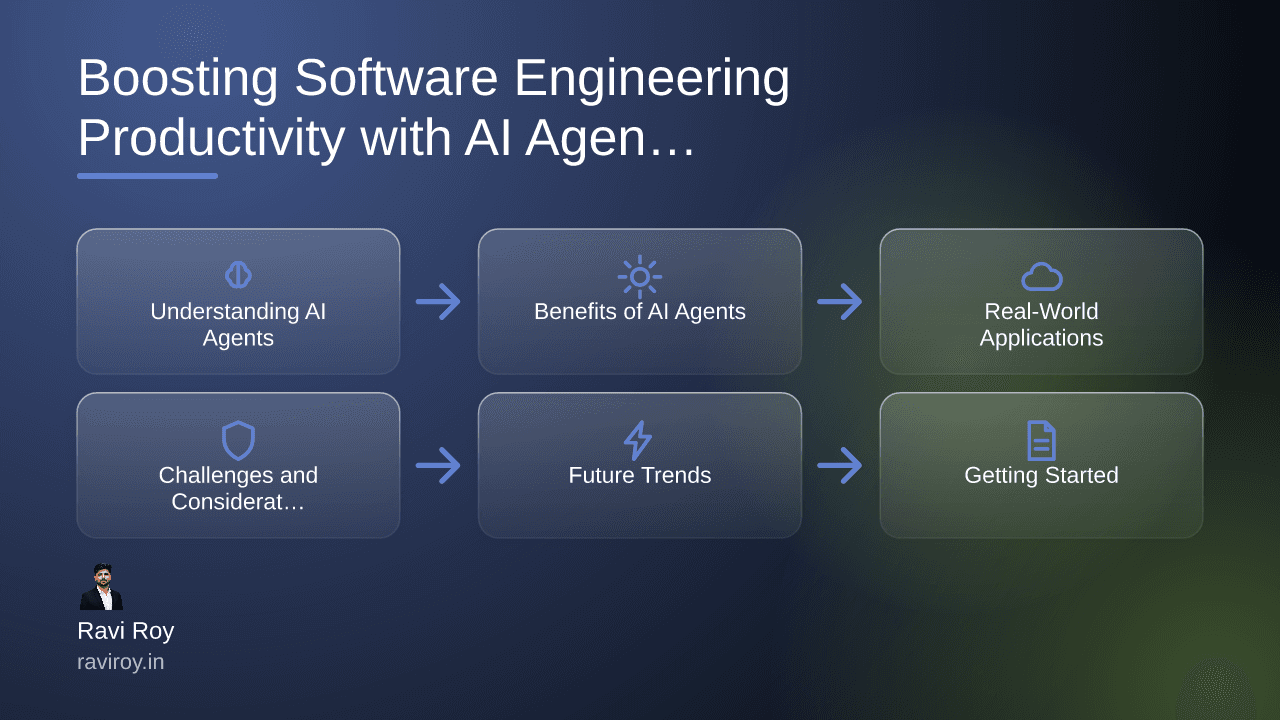
Boosting Software Engineering Productivity with AI Agents
Imagine slashing your coding time in half while simultaneously improving the quality of your software. With AI agents on the rise, this isn't just a fantasy; it’s becoming a reality in the software engineering realm. These intelligent systems are reshaping the way developers work, offering tools that enhance productivity and efficiency like never before.
Understanding AI Agents in Software Engineering
What are AI Agents?
AI agents are systems designed to perform specific tasks autonomously or semi-autonomously, utilizing algorithms that enable them to learn and adapt. In software engineering, these agents can automate mundane processes, provide valuable insights, and enhance decision-making, allowing engineers to focus on strategic and creative tasks.
Types of AI Agents Used in Software Engineering
The landscape of AI agents in software development is diverse. Here are some major types:
Chatbots: Often used for customer support, these AI agents can assist developers by answering questions, providing documentation, or troubleshooting common problems.
Recommendation Systems: These analyze previous code commits or project histories to suggest improvements or best practices, guiding developers toward efficient solutions.
Code Analysis Tools: Tools like static analyzers and linters leverage AI to identify bugs, vulnerabilities, and stylistic errors, enhancing the code review process and promoting best coding practices.
The Benefits of AI Agents for Software Engineers
Increasing Efficiency
AI agents can dramatically increase efficiency by automating routine and repetitive tasks. For instance, instead of spending hours manually scanning code for errors, AI tools can quickly pinpoint issues and even suggest corrective actions, saving valuable time and energy. Developers can shift their focus to more complex problems, enhancing overall productivity.
Enhancing Code Quality
Code quality is paramount in the development process. AI-driven tools analyze codebases for defects and suggest improvements, leading to cleaner and more maintainable code. A study found that teams using AI-based code review tools reduced code-related issues by 30%, allowing for smoother deployments and fewer rollbacks (source).
Facilitating Collaboration
AI agents play a crucial role in enhancing team communication and project management. By analyzing team workflows, these agents can identify bottlenecks and recommend adjustments to improve collaboration among team members. Tools like GitHub’s Copilot assist in code sharing and brainstorming, fostering a more efficient workflow.
Real-World Applications of AI Agents in Software Development
Case Study: Automated Testing with AI Agents
Automated testing has evolved significantly with the integration of AI agents. For example, a mid-sized software company implemented an AI-driven testing solution that not only automated their regression tests but also increased the accuracy of tests run. This resulted in a 40% increase in deployment velocity while reducing the number of defects found post-deployment. The seamless integration allowed the team to focus on feature development, significantly accelerating their release cycles.
Using AI for Code Reviews
An exciting application of AI is in code reviews. With AI-assisted tools, developers can conduct preliminary reviews in a fraction of the time it would normally take. AI systems can flag common errors, enforce coding standards, and even provide alternative coding solutions. According to recent surveys, utilizing AI for code reviews can speed up the review process by up to 50%, minimizing development cycles and enhancing quality assurance.
Challenges and Considerations of Implementing AI Agents
Data Privacy Concerns
While AI agents offer immense benefits, the deployment of these technologies can raise significant data privacy concerns. Regulations like GDPR necessitate that companies consider how data is collected and used by AI agents, which can complicate their implementation. Companies must ensure that sensitive data is protected while still allowing AI tools to function effectively.
Integration with Existing Tools
Integrating AI agents with legacy systems can pose a major challenge. Older systems may not support the latest AI technologies, which can create friction when trying to implement new solutions. Developers may face considerable hurdles in ensuring compatibility, which requires careful planning and understanding of both new and existing infrastructures.
Maintaining Human Oversight
Despite the advancements in AI, maintaining human oversight remains crucial. AI agents should enhance human capabilities rather than replace them. Establishing a workflow where human developers review AI-generated suggestions ensures that quality standards are upheld and prevents over-reliance on automated systems.
Future Trends in AI Agents and Software Engineering
Machine Learning Advancements
As machine learning technologies evolve, we can expect AI agents to become even more sophisticated. Upcoming trends include improved algorithms that offer predictive analytics for project timelines and potential code risks, allowing developers to be more proactive rather than reactive.
Greater Personalization of Development Tools
Looking ahead, AI agents will provide increasingly personalized experiences tailored to individual developer needs. Imagine a coding assistant that adapts to your style, suggesting code snippets or frameworks based on previous projects, ultimately creating a more efficient and enjoyable development process.
Getting Started with AI Agents in Your Projects
Choosing the Right Tools
When diving into the world of AI agents, selecting the right tools is vital. Popular AI agent tools include:
GitHub Copilot: Offers suggestions and helps speed up the coding process.
TabNine: A code completion tool that integrates seamlessly with most editors.
SonarQube: A code quality tool that integrates AI to identify potential vulnerabilities.
Best Practices for Implementation
To successfully integrate AI agents into your software engineering workflows, adhere to these best practices:
Start Small: Begin with one area of your development process—like code reviews or testing—and gradually expand to other areas as you stabilize the workflow.
Train Your Team: Provide training for your team members to understand how to utilize AI tools effectively.
Gather Feedback: Continuously collect input from your developers on AI tool performance to make necessary adjustments.
As AI technology continues to advance, software engineering practices will transform accordingly, leading to greater productivity and optimization.
What has your experience been with using AI agents in your software projects? Share a specific instance where an AI tool changed your workflow for the better!
💬 Join the conversation — share your take in the comments and tell us what you’d add.