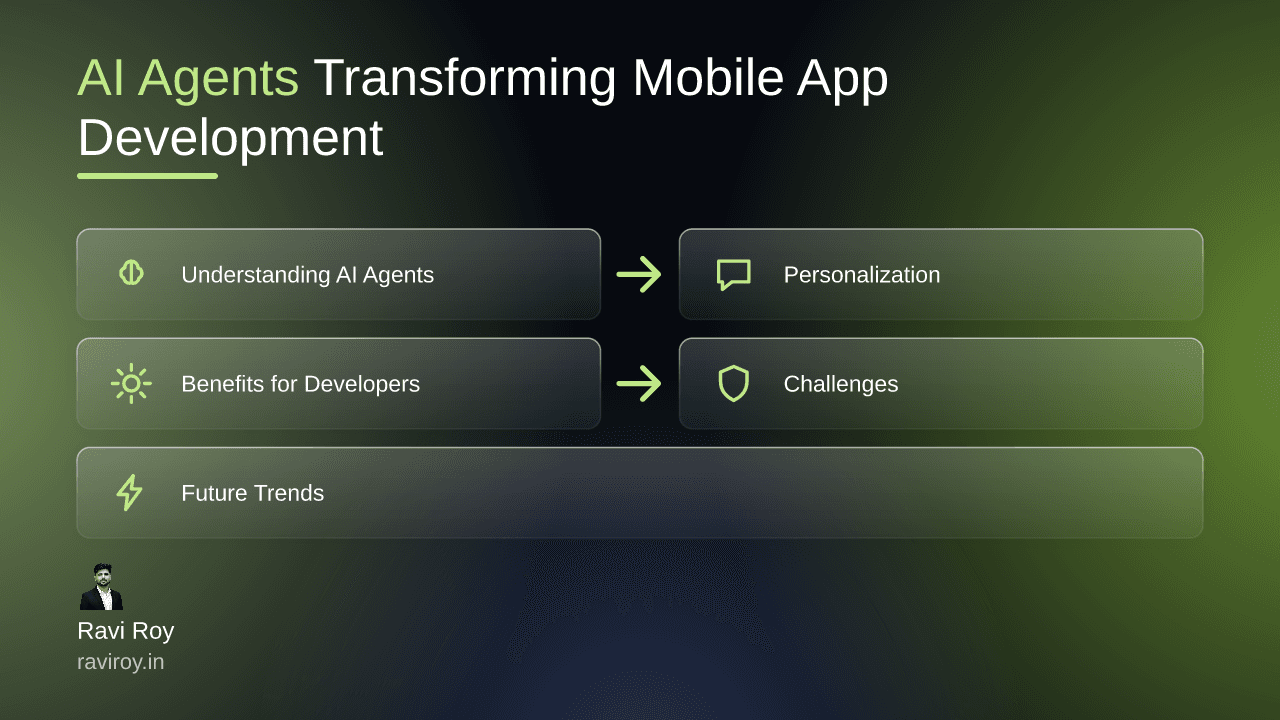
Understanding AI Agents in Mobile App Development
Imagine opening your favorite app and being greeted not just by a static menu or feed, but by a dynamic assistant that understands your preferences and needs. This is what AI agents bring to mobile app development—a transformative approach that enhances user engagement and provides personalized experiences.
Definition of AI Agents
AI agents are autonomous software entities designed to perform tasks for users within mobile applications. They can learn from user interactions, analyze preferences, and make decisions to enhance the overall app experience. From chatbots providing customer support to intelligent recommendation systems suggesting content, AI agents can reshape how users interact with technology.
Role of AI Agents in Mobile Apps
The role of AI agents in mobile apps goes beyond mere task completion. By personalizing user experiences, AI agents reduce friction in interactions, allowing for seamless navigation and a more enjoyable user journey. For instance, a travel app could leverage an AI agent that not only books flights but also curates personalized itineraries based on the user’s past trips and preferences.
Personalization Through AI Agents
Hyper-Personalization Explained
Hyper-personalization is the next level of personalization, leveraging AI agents to enhance user experiences by analyzing individual data points. This can include user behavior, preferences, location, and even real-time context. AI agents can deliver content, product recommendations, and notifications that resonate on a personal level, increasing engagement and satisfaction.
Case Studies of Successful Personalization
Several companies have embraced AI agents for hyper-personalization. For instance, Spotify uses AI algorithms to analyze listening habits, generating tailored playlists like "Discover Weekly" that keep users engaged. Similarly, Amazon's recommendation engine utilizes AI agents to suggest products based on browsing and purchasing history, driving significant sales through personalized user experiences.
Benefits of AI Agents for App Developers
Enhanced User Engagement
One of the primary benefits of integrating AI agents into mobile applications is enhanced user engagement. By offering dynamic and tailored content, apps can significantly increase retention rates. A game app featuring an AI-driven character that adapts to player strategies can make the experience immersive, ensuring users return for more.
Automation of Workflows
AI agents also automate many workflows involved in mobile app development. By streamlining user interactions—such as onboarding processes or customer support queries—developers save time and resources. Automation not only cuts down operational costs but also allows developers to focus on creative and strategic tasks. For instance, AI agents can handle routine inquiries via chatbots, freeing up human resources for complex issues.
Challenges in Developing AI Agent-Driven Apps
Ethical Concerns and Biases
While AI offers substantial benefits, it comes with challenges, particularly regarding ethics and biases. AI models can sometimes propagate existing biases, leading to skewed results that negatively impact user experience. Developers must actively work to identify and mitigate these biases during the creation and training of AI agents, ensuring fairness and inclusivity.
Technical Hurdles in Implementation
Another significant challenge involves the technical hurdles in implementing AI agents. Real-time processing demands sophisticated edge computing solutions, as user experiences rely on swift responses. Additionally, the necessity of protecting user data raises concerns; developers must prioritize data privacy while still providing personalized experiences. This can complicate the development process, requiring a delicate balance between performance and security.
The Future of Mobile Apps with AI Agents
On-Device AI Processing
Looking ahead, the future of mobile apps will likely see a shift toward on-device AI processing. This approach empowers users with greater control over their data while enhancing performance, as data doesn’t need to be sent back and forth between devices and servers. By processing data locally, apps can provide faster responses and improve the overall user experience.
Trends to Watch in AI Agent Development
Emerging trends in AI agent development are poised to redefine user engagement further. Multi-agent coordination, where several AI agents collaborate within a single application, promises higher efficiency and more sophisticated interactions. For example, a personal finance app might feature one agent that tracks spending while another suggests savings plans, creating a comprehensive financial support system.
Conclusion and Discussion
AI agents are transforming mobile app development by enhancing personalization and efficiency. As developers, there's an incredible opportunity to create rich, engaging experiences that cater to user preferences. The potential is both exciting and challenging.
What challenges have you faced when integrating AI agents into your mobile apps?
💬 Join the conversation — share your take in the comments and tell us what you’d add.